
2026-06-22
How a Powder Coating Line Conveyor Connects Spraying, Curing and Cooling
Powder coating line conveyors must balance layout, process rhythm, high-temperature areas and loading efficiency.
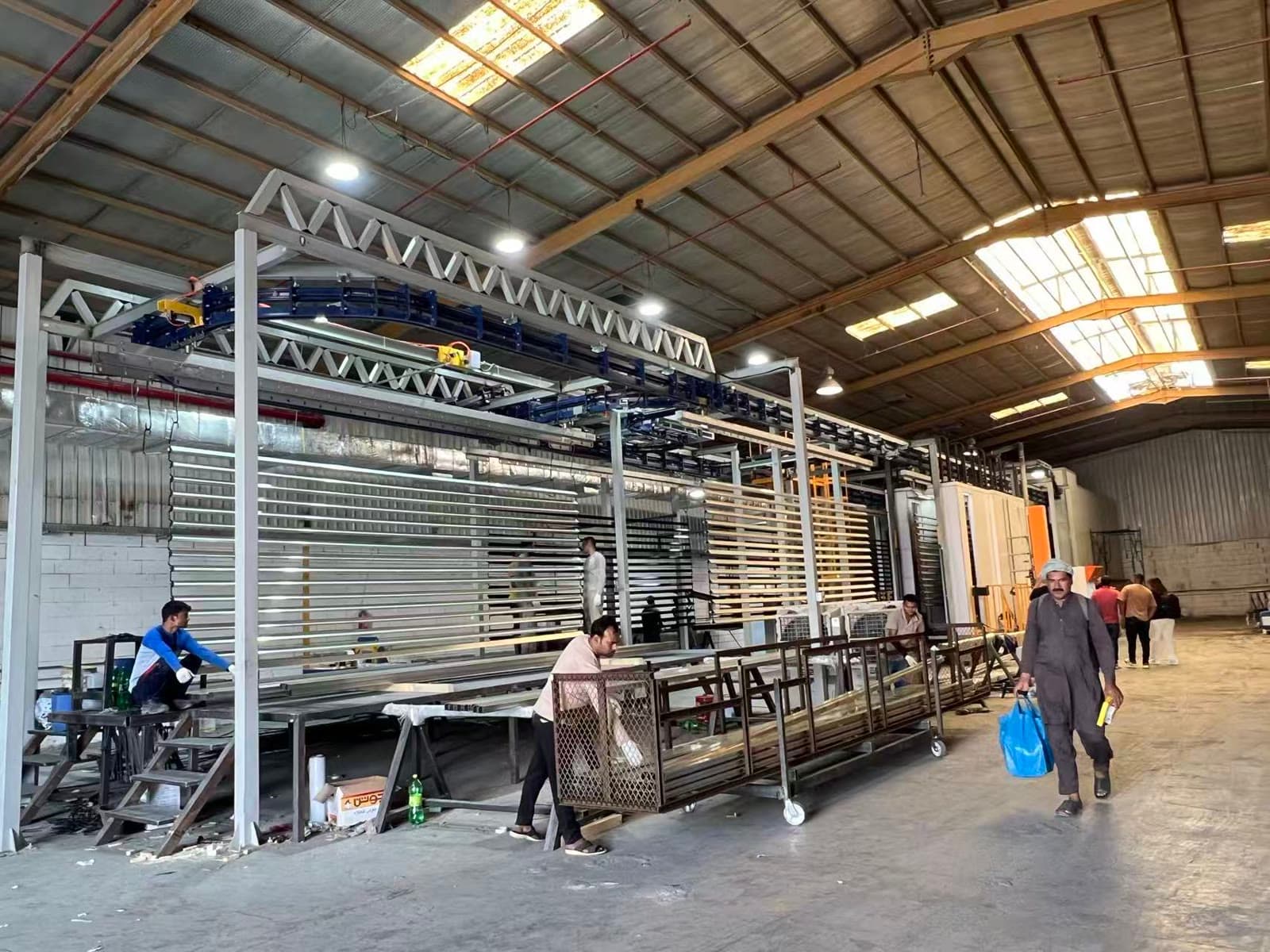
The core of a powder coating line conveyor is not maximum speed. The key is stable rhythm between spraying, curing, cooling, loading and unloading. The conveyor has to move workpieces to the right position and also support waiting, direction changes or lift transfer when needed.
Spraying areas need stable movement
The spraying area usually needs workpieces to pass with stable posture and rhythm. The overhead conveyor should reduce unnecessary shaking, congestion and stops while leaving enough room for spraying equipment and operators.
When accumulation is required, stop units and position sensors help confirm carrier position. The control system can then decide whether the next section is ready for release.
Curing areas need temperature-aware maintenance
Curing areas place higher demands on chains, carriers and lubrication. High-temperature sections should use oil or grease with suitable temperature resistance and low volatility, with lubrication intervals adjusted by working conditions.
This means conveyor design should consider more than track direction. Inspection, lubrication, service access and maintenance records should be planned from the start.
Cooling and loading return the line to rhythm
After workpieces leave the high-temperature area, cooling, transfer and loading sections need to bring the line back to controlled rhythm. Conveyor units such as lifts, pushers, switches and stops decide whether the workpiece moves smoothly into the next process.
If fast-to-slow chain transfer, turns or lift interfaces are not handled well, carriers may jam, follow too closely or stop inaccurately. These points should be clarified during design.
Information to prepare for a solution discussion
- Workpiece size, weight and hanging method
- Length and temperature of spraying, curing and cooling areas
- Loading and unloading method
- Need for accumulation, diverting, merging or lift transfer
- Workshop height, column positions and equipment clearance
With this information, a conveyor solution can move from concept to practical discussion much faster.
Need to discuss a project?
Contact M&J by phone or WeChat with your workpiece, process route, site space and maintenance needs.
Request a Solution